A Reflection on Silence in Prayer
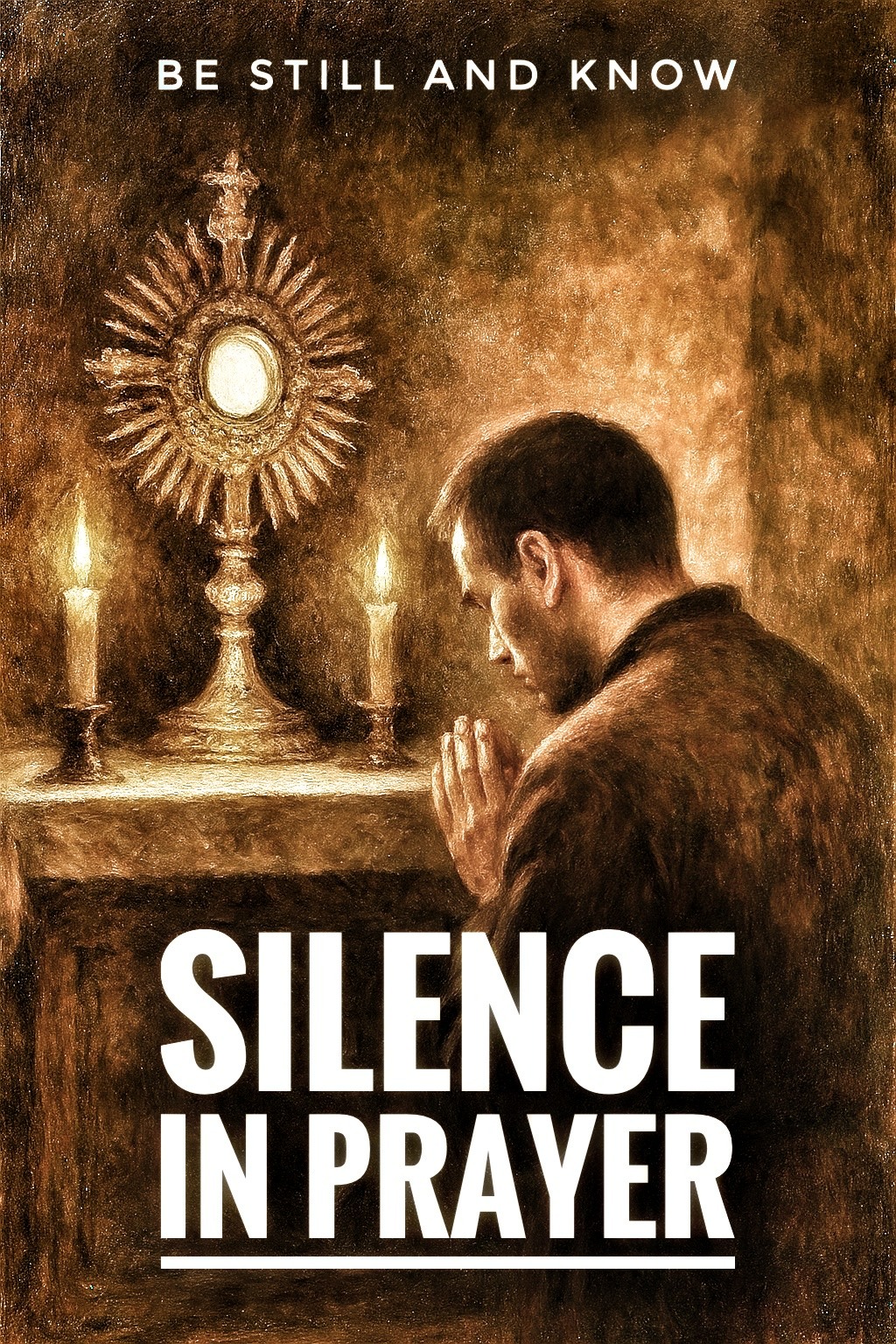
I need silence in my prayer because silence opens my heart to God. I sit without words, not to empty myself of thought but to make space for the One who speaks gently. Scripture bids me to be still: “Be still, and know that I am God” (Psalm 46:10). In that stillness I practise listening rather than performing, and I find that prayer becomes conversation turned toward presence rather than noise.
BLESSED SACRAMENTREFLECTIONS
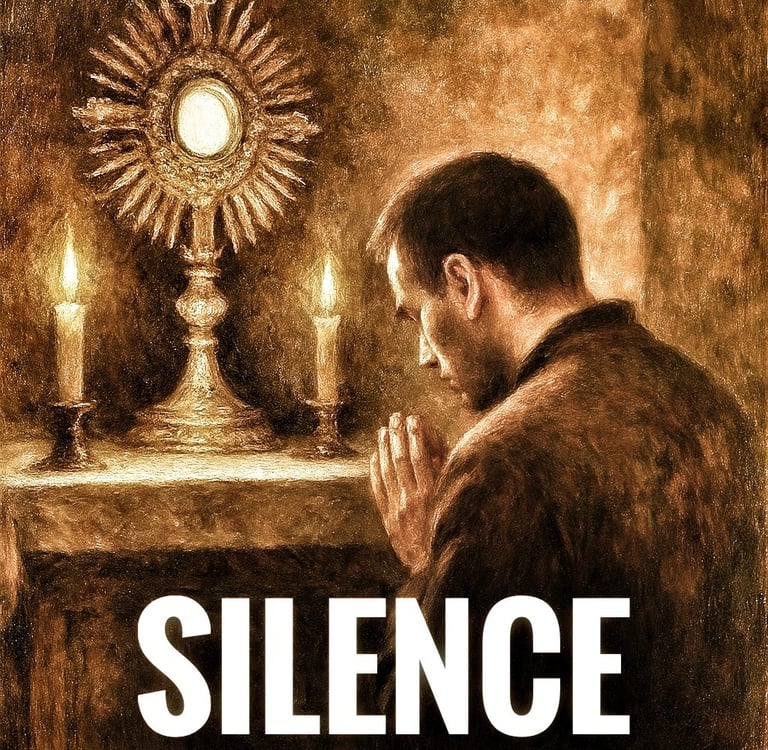
I need silence in my prayer because silence opens my heart to God. I sit without words, not to empty myself of thought but to make space for the One who speaks gently. Scripture bids me to be still: “Be still, and know that I am God” (Psalm 46:10). In that stillness I practise listening rather than performing, and I find that prayer becomes conversation turned toward presence rather than noise.
Silence in Christian practice comes from the Desert Fathers and the monastic traditions that followed them. Monks sought solitude and quiet not as an escape from the world but as a way to hear God’s voice clearly, to let the Word take root in the soil of a heart made still. The Rule of St Benedict exhorts us to “listen with the ear of your heart,” a discipline that shapes a life where speech is measured and interior attention is cultivated. Historical and liturgical reflections emphasise that silence is an ascetical value and a necessary condition for contemplative prayer Spiritual.
At the core of my silence is the Eucharist. Before the living Christ present in the sacrament I find a silence that is itself an act of worship. The Mass contains prescribed moments of silence so that the faithful and the priest can adore, prepare, and respond inwardly to the mystery unfolding at the altar, a living sacrament of healing and mercy. Those silent prayers of the priest and the pauses at the altar are not incidental; they form a sacred space in which Christ’s presence can be met and received. When I sit before the tabernacle or remain kneeling after Communion, my silent attention becomes a language of adoration that words cannot reach.
Silence matters because it re-forms my interior habits. I live in a culture of constant noise and hurry; therefore, cultivating silence trains me to notice God in the small and steady things in my everyday life. Silence slows my reflex to perform, corrects my hunger for approval, and restores me to a posture of wonder. The saints teach that prayer is friendship with God; silence is the posture in which friendship deepens. Teresa of Ávila reminds me that prayer is an intimate sharing between friends, and that intimacy needs room to breathe.
I carry that Eucharistic silence into ordinary life by keeping short moments of stillness: a pause before speaking, a breath before reacting, a minute of quiet on waking and before sleep. Those small silences are sacramental in the sense that they make me attentive to presence — to the Christ who accompanies me in bread and in my daily path. Silence is one of the languages of heaven; practising it in the here and now trains me to hear that language more readily when the ordinary noise grows loud.
I will keep practising silence because it trains my soul to receive rather than exhaust itself. I will return often to the Eucharist and let the silent contemplation there shape how I live, speak, and love. I remember the ancient summons to stillness and the saints’ confidence that God meets us most deeply when we simply listen.
Prayer
Lord Jesus, in the quiet before Your presence I come to listen; teach my heart the language of silence. Make my stillness a place of true worship where words fall away and adoration remains.
Help me to sit before the Eucharist with reverence and plain attention, receiving Your life in wordless praise. Shape my days by those moments of silence so that my speech and action flow from Your presence. Strengthen me to carry this silence into my home and work, that others may meet Christ in my calm. Grant me the wisdom of the Desert Fathers and the humility of the saints to remain small and attentive before You.
Amen.
Ancient Apostolic Catholic Church
Embracing faith, inclusion, and compassionate service together.
ST THOMAS AQUINAS SEMINARY
© 2026. All rights reserved
QUICK LINKS
Prayer Requests
Mass Intentions
Requiem Mass
Contact Us
Pilgrim Chronicles
ORDER OF ST DAVID
ORDER OF THE KNIGHTS OF ST MARY OF BETHLEHEM