Amen Reclaimed: A Devotional and Theological Meditation
Amen is one of those small words that quietly structures the life of faith. It slips into prayers, punctuates hymns, closes creeds and letters, and yet because it is so familiar it is often treated as a ritual reflex rather than a theological act.
BIBLE STUDIESREFLECTIONS
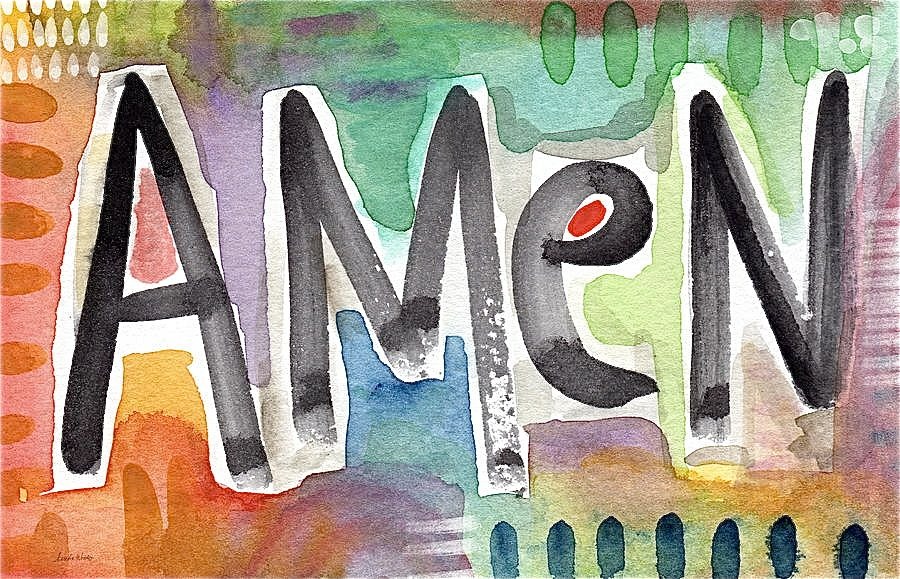
Amen is one of those small words that quietly structures the life of faith. It slips into prayers, punctuates hymns, closes creeds and letters, and yet because it is so familiar it is often treated as a ritual reflex rather than a theological act. This reflection aims to recover Amen’s depth: its Hebrew roots of faithfulness, its role in covenant life, its liturgical power in communal worship, and its consummation in the person and work of Jesus Christ. Read as more than a conventional tag at the end of a prayer, Amen becomes a performative confession that binds speaker and promise, congregation and covenant, time and eschatological hope.
The word and its root
At heart Amen is a declaration of truth and steadiness. Its Hebrew root carries ideas of firmness, reliability and faithfulness. Saying Amen is to claim: “This is true; it stands; I stake myself upon it.” That simple posture links speech to reality: words do not merely describe; they confirm and bind. In a biblical worldview where words, especially divine words, carry creative and covenantal force, Amen serves as the communal seal that says: we accept, we trust, we hold to this as real and binding.
Covenant and communal assent
Amen lives most naturally in covenant contexts. In public covenant renewals, liturgical blessings and the pronouncements of law, the assembled people answer Amen as a mutual pledge. This is not mere assent to a proposition but a communal enactment of responsibility. When Israel answered Amen to the curses and blessings of the Law, they were not simply agreeing intellectually; they were entering into shared obligation before God and neighbour. The corporate Amen testifies that the community recognises both God’s claim and their accountability under it.
Amen as performative speech
Language in Scripture is often performative: to speak is to do. Amen functions in this register. To say Amen is to make a verbal action that effects a stance of faith. It moves the listener from passive reception to active ownership. In worship, Amen turns a spoken blessing or declaration into the congregation’s vow: the priest blesses, the church affirms; the prophet pronounces, the people confess. That performative dimension is why Scripture treats Amen as weighty—because it creates a spiritual and social reality: covenant confirmed, promise accepted, prayer joined.
Christological fulfilment
The New Testament gives Amen a startling elevation: Christ himself is identified with the Amen. That designation is theologically significant. If Amen names truth and faithfulness, then to call Christ the Amen is to say: in him God’s promises find their vindication; in him the divine word is finally dependable. The early church’s confession that “Christ is the Amen” locates the certainty of God’s covenant not in ritual or custom but in the person whose life, death and resurrection secure the fulfilment of every divine promise. Thus, our Amen is not an abstract assent but a Christ-anchored affirmation: we say “so be it” because God’s fidelity is revealed decisively in Jesus.
Liturgical life and devotional practice
Practically, recovering the depth of Amen reshapes worship. Three modest changes help reconnect the spoken Amen to its theological weight:
Slow the word down: allow Amen to be a measured assent rather than an automatic tag.
Make it communal: teach the congregation to see Amen as their corporate attestation, not simply the minister’s sign-off.
Link it to content: encourage people to say Amen consciously to specific claims—promises, petitions and doxologies—so the word becomes a sacramental affirmation of God’s fidelity.
When Amen is used with awareness it transforms endings into commitments and conclusions into anticipatory acts of hope.
Eschatological horizon
Amen is forward-looking as well as confirming. To say Amen before a proclamation of God’s future is to affirm not only that God has spoken but that God’s Word will come to pass. In the Christian imagination that affirmation acquires an eschatological intensity: Amen anticipates the final consummation, the defeat of death, and the full realisation of God’s reign. Thus, every Amen in the liturgy contains a miniature eschatology—an assertion that God’s purposes are at work and will reach their consummation.
A practical challenge
Treat Amen as a theological action. Next time you say it aloud in worship or private prayer, pause for a full breath and let the word press its claims into you: trust, covenant, Christ’s faithfulness, and the sure hope of consummation. Let Amen be the body’s way of saying “I will live by this promise,” and let your speech shape the life of faith it confesses.
Amen is deceptively small and quietly powerful. It binds speaker and promise, links ancient covenantal practice to contemporary devotion, and points us toward the final Yes found in Christ. To recover Amen is to recover a discipline of believing speech: words that do more than end a prayer—they enter us into the truth they confess. Amen.
Ancient Apostolic Catholic Church
Embracing faith, inclusion, and compassionate service together.
ST THOMAS AQUINAS SEMINARY
© 2026. All rights reserved
QUICK LINKS
Prayer Requests
Mass Intentions
Requiem Mass
Contact Us
Pilgrim Chronicles
ORDER OF ST DAVID
ORDER OF THE KNIGHTS OF ST MARY OF BETHLEHEM