Blessed William Ireland and the Price of Truth
William Ireland's martyrdom teaches us that fidelity to truth may cost us dearly. Not all of us will be called to die for the faith, but all of us will be called to make sacrifices for it. We may lose friends, miss opportunities, face ridicule or worse.
SAINTS
The Courage of Conviction: Blessed William Ireland and the Price of Truth
When William Ireland stood in the dock at the Old Bailey in December 1678, he faced a charge that was both deadly serious and utterly absurd. He was accused of plotting to murder King Charles II, to burn down London, and to orchestrate a Catholic uprising that would put England back under papal authority. None of it was true. The entire Popish Plot, as it became known, was a fabrication invented by Titus Oates and Israel Tonge, men whose lies would send dozens of innocent Catholics to their deaths.
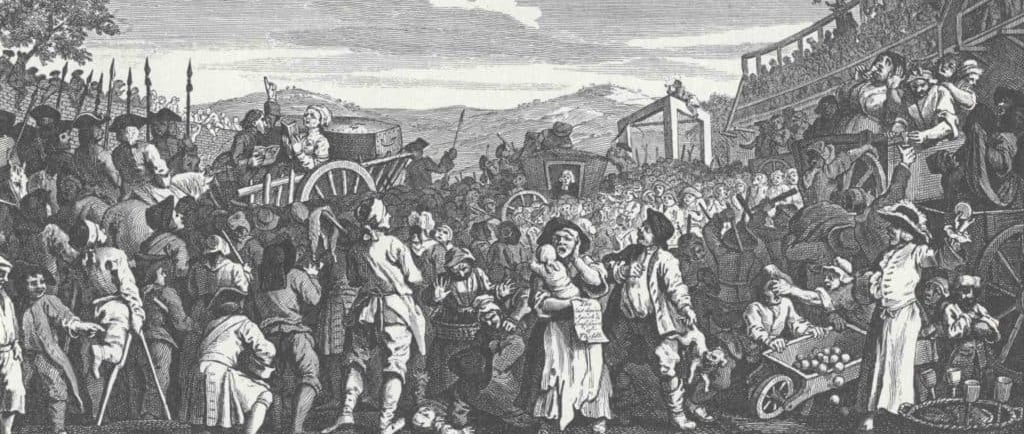
Ireland knew he was innocent. The court knew he was innocent (though they would never admit it). Even some in the baying crowd must have harboured doubts. Yet on 24 January 1679, this quiet Jesuit lay brother was dragged through the streets of London to Tyburn and hanged, drawn and quartered for crimes he had never committed.
What strikes me most forcefully about William Ireland's martyrdom is not simply that he died for being Catholic (though that alone would be remarkable enough). It is that he died for a truth he could easily have abandoned. He could have conformed. He could have taken the Oath of Supremacy, attended Protestant services, and lived out his days in peace. Instead, he chose the rope.
This brings us to the heart of what his witness means for us: the absolute primacy of truth, even when lies are more convenient, more popular, and infinitely safer.
The Culture of the Lie
The Popish Plot was not just a miscarriage of justice. It was a systematic campaign of falsehood that gripped an entire nation. Oates and Tonge understood something that demagogues throughout history have grasped: if you make a lie big enough, and repeat it loudly enough, people will believe it.
Saint Augustine once wrote that 'when regard for truth has been broken down or even slightly weakened, all things will remain doubtful' (Against Lying, I.1). England in 1678 had broken down its regard for truth. Parliament was willing to believe that Jesuits were skulking in every shadow. The public was ready to accept that their Catholic neighbours were traitors. The courts were prepared to condemn men on the flimsiest of evidence.
This wasn't merely about religious prejudice. It was about the corruption of reason itself. When a society decides that political expediency matters more than truth, when fear trumps evidence, when scapegoats are more useful than justice, then we are all diminished. The Catechism reminds us that 'the eighth commandment forbids misrepresenting the truth in our relations with others' (CCC 2464). But the Popish Plot went further. It didn't just misrepresent truth; it inverted it entirely. Innocence became guilt. Fidelity became treason. Priesthood became conspiracy.
William Ireland stood against this inversion. He refused to participate in the lie, even when his life depended on it.
The Jesuit Commitment to Truth
Ireland was a Jesuit, and that matters. The Society of Jesus has always placed enormous emphasis on education, scholarship and the pursuit of truth. Saint Ignatius Loyola founded the order with a conviction that the life of faith must be a life of the mind, that devotion to God demands intellectual rigour as well as spiritual fervour.
The Jesuit motto, 'Ad Maiorem Dei Gloriam' (for the greater glory of God), doesn't mean glory achieved through spectacular miracles or grand victories. It often means the patient, unglamorous work of seeking truth in a world that prefers comfortable lies. This is why Jesuits built universities, wrote theology, engaged in scientific research, and yes, sometimes died for refusing to compromise what they knew to be true.
William Ireland was not a priest. He was a lay brother, a man who served the Society through practical work rather than sacramental ministry. But he shared fully in the Jesuit commitment to truth. When offered his life in exchange for a false confession, he declined. When pressed to save himself by denouncing his faith, he refused. His final words at Tyburn were not a dramatic speech but a simple, clear declaration of innocence and a profession of Catholic faith.
This is the pattern we see throughout the lives of the martyrs. Saint Thomas More, facing the executioner's block, said he died 'the King's good servant, but God's first' (cited in his canonisation documents). Saint Edmund Campion, another Jesuit martyr from the same era, declared at his trial, 'in condemning us, you condemn all your own ancestors, all our ancient bishops and kings, all that was once the glory of England' (quoted in Evelyn Waugh's Edmund Campion). They refused to let lies define reality, even when reality cost them everything.
Truth as Martyrdom
The Greek word 'martyr' means witness. The martyrs are those who bear witness, who testify to the truth of the Gospel even unto death. But what exactly are they witnessing to?
It would be easy to say they witness to the truth of specific doctrines, the real presence of Christ in the Eucharist, the authority of the Pope, the seven sacraments. And certainly, these truths mattered. But I think the deeper witness is to something more fundamental: that truth itself is worth dying for.
We live in an age that often treats truth as fungible, something that can be adjusted to suit our purposes. We speak of 'my truth' and 'your truth' as though truth were a matter of personal preference rather than objective reality. We accept that politicians will lie, that advertisers will manipulate, that social media will distort. We have, in many ways, made peace with dishonesty.
The martyrs rebuke this accommodation. They insist that truth is not negotiable. Saint Paul writes to the Ephesians, 'Therefore, putting away falsehood, let everyone speak the truth with his neighbour, for we are members one of another' (Ephesians 4:25). This isn't just moral advice. It's a description of reality. We are members of one another. When we lie to each other, we tear at the fabric of our common humanity. When we bear false witness, we sin not just against an individual but against the Body of Christ itself.
William Ireland's death was a vindication of this principle. He would not bear false witness against himself. He would not participate in the lie that he was a traitor. He chose the truth, and the truth led him to the scaffold.
Living in Truth Today
So what does Blessed William Ireland have to say to us, here and now?
First, that truthfulness is not optional for Catholics. The Catechism states clearly that 'the disciple of Christ consents to "live in the truth", that is, in the simplicity of a life in conformity with the Lord's example' (CCC 2470). This means more than not telling lies (though it certainly means that). It means living in such a way that our lives testify to what we believe.
How many of us hedge our faith, downplay our convictions, or keep quiet about what we know to be true because we fear the social cost? William Ireland faced execution. Most of us face, at worst, awkward conversations or mild social disapproval. Yet we compromise where he would not.
Second, his witness reminds us that the Church has always been at her best when she has stood against the lies of the powerful. The early Christians refused to burn incense to the emperor, not because they were disloyal to Rome but because they would not affirm a lie (that Caesar was divine). The medieval Church resisted kings who claimed absolute authority over souls as well as bodies. The twentieth century Church produced martyrs who defied both fascism and communism.
Today, we face different lies but lies nonetheless. The lie that human beings are autonomous individuals with no obligations beyond our own desires. The lie that the unborn are not persons. The lie that marriage can mean whatever we want it to mean. The lie that suffering has no meaning and death no dignity.
The Church's role is not to accommodate these lies but to speak truth into them. This doesn't mean being cruel or uncharitable. Jesus was full of grace and truth (John 1:14), not one or the other. But grace without truth is mere sentimentality, and truth without grace is mere harshness. We need both.
Finally, William Ireland's martyrdom teaches us that fidelity to truth may cost us dearly. Not all of us will be called to die for the faith, but all of us will be called to make sacrifices for it. We may lose friends, miss opportunities, face ridicule or worse. The question is whether we love truth more than we love comfort.
Saint John Paul II, who knew something about standing for truth against powerful lies, wrote in his encyclical Veritatis Splendor that 'martyrdom is an exaltation of a person's perfect human integrity' (VS 90). The martyr is not diminished by death but fulfilled by it, because in choosing truth over life itself, the martyr shows that some things matter more than biological survival.
William Ireland, pray for us. Pray that we might have the courage to live in truth, to speak truth, and if necessary, to die for truth. Pray that we might remember that the Church is built on the blood of witnesses, and that our faithfulness today will sustain the Church tomorrow.
In a world that increasingly treats truth as negotiable, give us the grace to follow your example. Help us to be Jesuits in the best sense, people committed to the greater glory of God through unwavering fidelity to what is real, what is true, and what is eternal.
Ancient Apostolic Catholic Church
Embracing faith, inclusion, and compassionate service together.
ST THOMAS AQUINAS SEMINARY
© 2026. All rights reserved
QUICK LINKS
Prayer Requests
Mass Intentions
Requiem Mass
Contact Us
Pilgrim Chronicles
ORDER OF ST DAVID
ORDER OF THE KNIGHTS OF ST MARY OF BETHLEHEM