Forgotten Councils That Shaped the Church
These forgotten councils shaped the Church we know today, even if we don't remember their names. They remind us that the Spirit works patiently, often in ways that only become clear long after the event.
CHURCH HISTORY
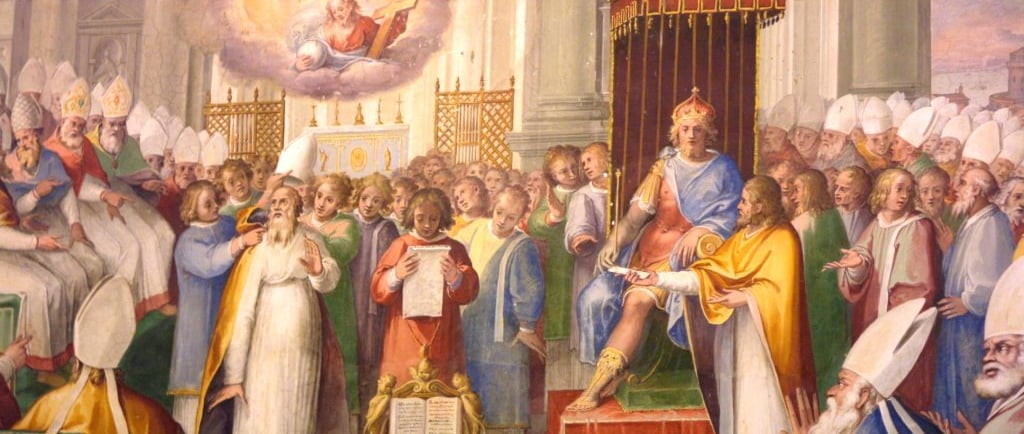
There's something rather humbling about standing in a great cathedral and realising that the very stones beneath your feet were laid according to decisions made by bishops gathered in council centuries ago. We often speak of Nicaea or Trent with reverence, and rightly so. Yet the Church's journey through history has been guided by numerous other councils whose names have faded from common memory, even as their theological fruits remain deeply embedded in our faith. These forgotten gatherings remind us that the Holy Spirit's work in the Church extends far beyond the famous headlines of history.
The Council of Orange (529 AD)
In the early sixth century, the Church in Gaul faced a pressing theological crisis. The relationship between grace and human will had become a battleground, with some interpreting Augustine's theology in ways that seemed to deny any meaningful role for human cooperation with divine grace. The debate wasn't merely academic. It touched the very heart of how ordinary believers understood their relationship with God.
The Council of Orange, convened by Caesarius of Arles, addressed this crisis with remarkable theological precision. The council fathers affirmed that salvation begins entirely with God's grace, yet without falling into the error of denying human freedom. As Scripture teaches, "No one can come to me unless the Father who sent me draws him" (John 6:44), but this divine drawing doesn't override our capacity to respond. The council's canons established that whilst the beginning of faith is God's gift, our cooperation with that grace remains genuinely free.
What makes Orange particularly significant is how it shaped our understanding of baptism. The council taught that through baptism, the effects of original sin are truly removed, not merely covered over. This isn't a minor theological detail. It establishes the foundation for how we understand the sacramental life. When we bring children to the font, we're not simply performing a ritual. We're acknowledging that God's grace precedes our merit, that salvation is gift before it is response.
The Catechism echoes this ancient wisdom when it states that "grace is favour, the free and undeserved help that God gives us to respond to his call" (CCC 1996). Orange gave us the theological vocabulary to hold together two truths that might seem contradictory: God initiates everything, and our freedom matters deeply.
The Council of Constantinople II (553 AD)
History often remembers this council for political intrigue rather than theological clarity, which does it a profound disservice. Called by Emperor Justinian to address lingering controversies about Christ's nature, the Second Council of Constantinople made crucial clarifications about the Incarnation that continue to shape orthodox Christology.
The council confronted a subtle but dangerous error: the tendency to divide Christ into two separate persons, one divine and one human, loosely united. This might sound like abstract philosophy, but consider its practical implications. If Christ's divinity and humanity aren't perfectly united in one person, then his suffering on the cross becomes something less than God truly entering into human pain. If Mary is mother only of Christ's human nature and not of the divine person who is God, then the Incarnation itself is compromised.
Constantinople II affirmed what we proclaim in the Nicene Creed: Christ is "one Lord Jesus Christ, the only-begotten Son of God". Not two lords, not two sons. The person who walked in Galilee and the person who exists eternally with the Father is the same person. This is why we can say with confidence that God has truly known human suffering from within, not as an observer but as one who has genuinely experienced it.
The council also defended the title Theotokos for Mary, not primarily as a Marian devotion but as a Christological statement. When we call Mary "Mother of God", we're proclaiming that the child she bore is truly divine. As the Catechism teaches, "Mary is truly 'Mother of God' since she is the mother of the eternal Son of God made man, who is God himself" (CCC 509).
This forgotten council reminds us that getting the details of doctrine right isn't pedantry. It's protection. Every heresy begins with a small deviation that seems reasonable, even charitable. The council fathers understood that compromising on Christ's full unity of person would eventually undermine the entire foundation of our redemption.
The Lateran Councils of the Middle Ages
We tend to remember the Fourth Lateran Council of 1215 for its definition of transubstantiation, but the earlier Lateran gatherings deserve attention for how they shaped the Church's practical life. The First Lateran Council (1123) and Second Lateran Council (1139) addressed questions that seem almost mundane until we recognise their lasting impact.
These councils reformed clerical discipline at a time when the boundary between sacred and secular had become dangerously blurred. They prohibited the purchase of church offices, a practice that had turned spiritual leadership into a commodity. They established clearer norms for clerical celibacy, not as a rejection of marriage but as a recognition that those called to represent Christ in persona Christi benefit from the undivided heart that celibacy makes possible.
The Third Lateran Council (1179) took on questions of election and authority, establishing that papal elections required a two-thirds majority. This might seem like ecclesiastical bureaucracy, but it prevented the kind of disputed elections that had torn the Church apart in previous centuries. Stable leadership structures aren't opposed to the Spirit's freedom. They're often the means by which that freedom can work without constant disruption.
What's remarkable about these medieval councils is their attention to both the heights of doctrine and the details of practice. They understood something that we sometimes forget: how we organise the Church's life either supports or undermines what we claim to believe. If we permit simony, we're saying that grace can be bought. If we allow disputed elections to paralyse leadership, we're suggesting that human politics matter more than apostolic succession.
The Catechism's teaching on the hierarchical structure of the Church (CCC 871-896) rests partly on these councils' work. They didn't invent the hierarchy, but they clarified how it should function in a way that serves rather than dominates the faithful.
The Council of Vienne (1311-1312)
This French council, overshadowed by the more famous Council of Trent, made contributions to sacramental theology that we take for granted today. Meeting in a period of significant upheaval, including the suppression of the Knights Templar, Vienne addressed fundamental questions about the soul and the sacraments.
The council taught that the rational soul is truly the form of the human body, a philosophical point with profound theological implications. This isn't merely abstract metaphysics. It means that our bodies aren't prisons for our souls or temporary vessels to be discarded. The resurrection of the body isn't an optional add-on to Christian hope. It's essential to who we are as human persons created in God's image.
Vienne also clarified the matter and form of baptism, establishing norms that prevented superstitious practices whilst preserving the sacrament's essence. Water and the Trinitarian formula aren't arbitrary choices. They're the means Christ himself established. The council protected the Church from two errors: magical thinking that saw sacraments as automatic transactions, and rationalistic thinking that reduced them to mere symbols.
This balance remains vital today. As the Catechism teaches, sacraments "are efficacious because in them Christ himself is at work: it is he who baptises, he who acts in his sacraments in order to communicate the grace that each sacrament signifies" (CCC 1127). Vienne helped establish this understanding against both superstition and reductionism.
The Significance of the Forgotten
Why does it matter that these councils have been largely forgotten? Not because we need to memorise their dates and canons, but because their obscurity teaches us something important about how tradition works. The Church's doctrine doesn't develop through dramatic revolutions but through patient clarification, often in response to very specific local challenges.
St Vincent of Lérins gave us a helpful principle: we hold to "what has been believed everywhere, always, and by all". But this doesn't mean the Church simply repeats ancient formulas unchanged. It means that authentic development preserves and clarifies what was implicit from the beginning. These forgotten councils show us this process at work.
The Second Vatican Council, in Dei Verbum, taught that "the tradition which comes from the apostles develops in the Church with the help of the Holy Spirit" (DV 8). This development isn't innovation but deeper understanding. Orange didn't invent the doctrine of grace. It clarified what the Church had always believed in response to specific distortions. Constantinople II didn't create Christology. It protected the apostolic faith from subtle errors.
There's a certain comfort in this. We're not called to reinvent Christianity for each generation. We're called to receive, protect, and transmit the deposit of faith. These councils, famous or forgotten, show us how the Church has done this work under the Spirit's guidance.
Living in Conciliar Communion
What difference should these forgotten councils make to our lives today? For one thing, they remind us that the Church's teaching didn't spring fully formed from the pages of Scripture. It developed through communal discernment, through bishops gathering to seek the Spirit's guidance for particular challenges.
This means that when we struggle with aspects of Church teaching, we're not simply wrestling with arbitrary rules imposed by distant authorities. We're engaging with a tradition that represents centuries of faithful reflection, prayer, and debate. The councils weren't perfect gatherings of perfect people. They were human assemblies guided by the Holy Spirit, working through disagreement to arrive at truth.
Consider how these councils approached controversy. They didn't seek compromise for the sake of peace or cling to positions for the sake of tradition. They asked: what does Scripture teach? What have the fathers handed down? How does this question touch the heart of the Gospel? Their method offers a model for how we engage theological questions today.
The councils also remind us that the Church exists in continuity across time. When we gather for Mass, we're not simply a local community doing our own thing. We're joining a conversation that stretches back through these councils to the apostles themselves. The words we say, the sacraments we celebrate, the doctrines we profess carry the weight of that long conversation.
Towards Theological Humility
Perhaps the most important lesson from these forgotten councils is theological humility. The Church has faced crises before. She has weathered controversies that seemed certain to destroy her. She has clarified doctrines in ways that seemed impossible. And through it all, she has been guided by the Spirit's presence.
This doesn't mean every council decision was flawless or that the process was always edifying. The human element in the Church's life is real and sometimes messy. But the fact that we can look back across centuries and see genuine development rather than arbitrary change gives us confidence. As Christ promised, "I am with you always, to the close of the age" (Matthew 28:20).
These forgotten councils shaped the Church we know today, even if we don't remember their names. They remind us that the Spirit works patiently, often in ways that only become clear long after the event. They teach us that tradition isn't dead weight but living memory, and that the Church's doctrinal clarity comes through struggle and discernment.
When we pray the Creed, when we receive the sacraments, when we trust in God's grace rather than our own merit, we're living the fruit of these councils' work. We stand on foundations laid by forgotten bishops who gathered in forgotten cities to address forgotten controversies. And yet what they clarified remains, living and active in the Church's life today.
This is how tradition works. Not through dramatic gestures but through faithful transmission. Not through constant innovation but through patient clarification. Not through forgetting the past but through remembering it well enough to build upon it. These councils, forgotten as they may be, continue to shape our faith. And in their obscurity, they remind us that the Spirit's work extends far beyond what makes the history books.
Ancient Apostolic Catholic Church
Embracing faith, inclusion, and compassionate service together.
ST THOMAS AQUINAS SEMINARY
© 2026. All rights reserved
QUICK LINKS
Prayer Requests
Mass Intentions
Requiem Mass
Contact Us
Pilgrim Chronicles
ORDER OF ST DAVID
ORDER OF THE KNIGHTS OF ST MARY OF BETHLEHEM