Humility Amid Power and Memory Shaping Truth
As I pray and contemplate on the life of St Sylvester today, I find myself drawn again and again to two simple but demanding lessons: how to hold humility in the presence of power, and how to steward memory so that truth is not lost to legend.
SAINTS
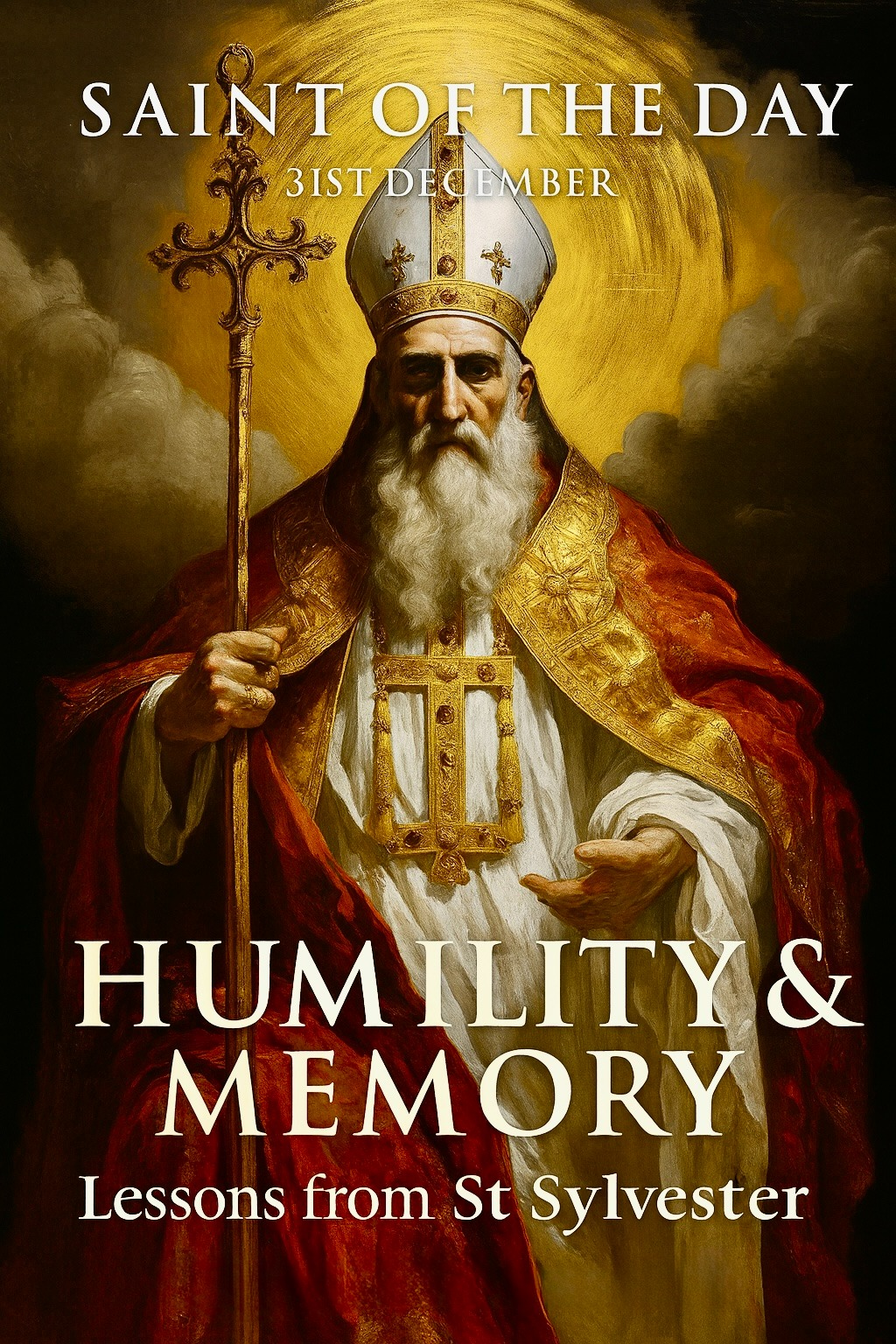
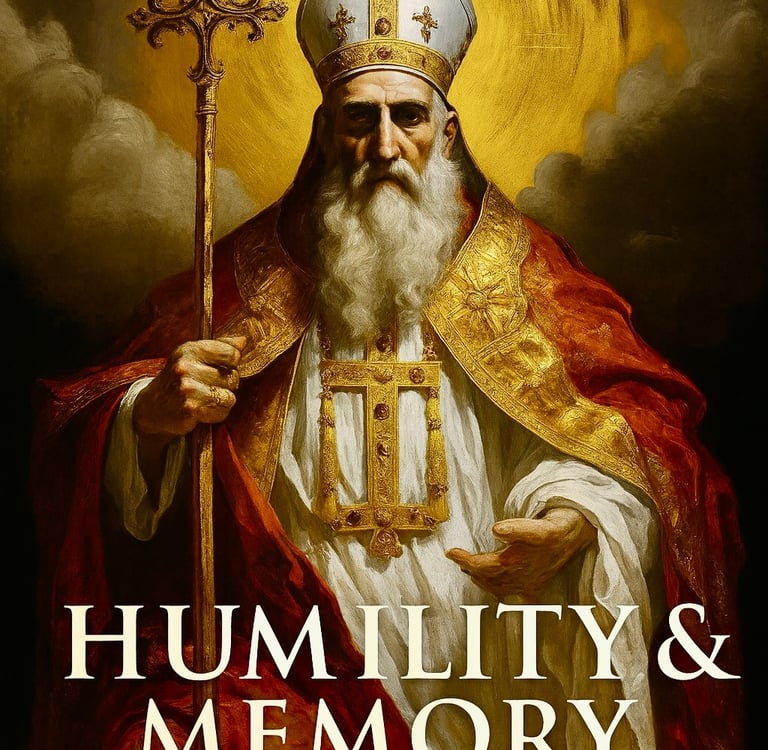
Saint of the Day, 31st December - Reflecting on St Sylvester I: Humility Amid Power and Memory Shaping Truth
As I pray and contemplate on the life of St Sylvester today, I find myself drawn again and again to two simple but demanding lessons: how to hold humility in the presence of power, and how to steward memory so that truth is not lost to legend. Born in Rome and ordained by Pope St Marcellinus, Sylvester lived through a turbulent era. He endured the persecutions that preceded the abdication of Diocletian, witnessed the fall of Diocletian and Maximian, and saw Constantine’s triumph in 312. Two years later he succeeded St Melchiades as Bishop of Rome. Those facts anchor me: his ministry sits at a hinge in history, where a persecuted Church began to find a new public place alongside imperial authority, and the choices made in that moment still echo for us.
What strikes me about Sylvester is the way influence was exercised through restraint. He served as pope for nearly twenty five years, and during that time he sent legates to the Council of the Western Church at Arles and, later, to the Council of Nicaea in 325. Too old to attend Nicaea in person, he nonetheless ensured his voice was present through representatives who headed the list of subscribers to its decrees, even preceding the Patriarchs of Alexandria and Antioch. That pattern, representation rather than self projection, feels like a form of humility that is both practical and prophetic. Leadership, in this light, is not about occupying the stage but about making sure the work gets done, the truth is defended, and the community is served, even when personal presence is impossible.
That humility amid power is not merely an historical curiosity; it is a challenge to my own life. It is easy to be seduced by visibility, to mistake influence for virtue, to let the trappings of authority become ends in themselves. Sylvester’s example invites me to practise small, steady disciplines: to notice when I seek recognition, to step back so others can lead, to insist on accountability in the communities I serve. These are not dramatic gestures but daily choices, choosing service over status, preferring stewardship to spectacle. In prayer I try to name these temptations honestly and to ask for the grace to be faithful rather than famous.
The second theme that keeps returning is the shaping of memory. Over the centuries, stories about Sylvester and Constantine accumulated; later generations wove legends and even forged documents, such as the so called Donation of Constantine, to assert claims the historical record does not support. That process is both a warning and an invitation. It warns us that comforting or convenient stories can harden into unquestioned authority, and that memory can be weaponised to justify power. It invites us, at the same time, to hold our traditions with reverence and critical care: to celebrate saints as companions on the way, not as flawless blueprints; to recognise the human work that shapes their memory so that we remain honest and teachable.
When I try to bring these themes into everyday practice, I begin with prayer and small communal habits. I use a brief examen each evening that asks, Where did I seek honour today? Where did I serve quietly? That simple discipline helps me notice patterns and repent where necessary. In community life I advocate for structures that distribute power, shared leadership, clear accountability, and public humility when mistakes are made, so that influence cannot be monopolised or mythologised. In teaching and formation I aim to tell the fuller story: the courage of those who endured persecution, the prudence of those who sent legates to councils, and the later ways memory was shaped. That means celebrating saints while also naming complexity, encouraging curiosity about history, and modelling humility when cherished narratives need correction.
There are real risks if we get this wrong. Romanticising legends can excuse abuses; cynically dismissing tradition can sever us from sources of grace. Either extreme impoverishes faith. The healthier path is to let saints humble us and to let honest memory form us, so we repent where necessary, celebrate where grace has been at work, and lead with integrity. This is a harder devotion than either romanticising the past or discarding tradition out of cynicism, but it is truer to the Gospel.
So I return to the hinge of Sylvester’s life: a Church moving from persecution to public favour, a leader who chose representation and delegation, and a memory that was later reshaped by human ambition. Those realities keep me honest. They call me to a faith that is courageous before power and candid about the stories we inherit. They call me to pray for humility, to build accountable communities, and to read our past with both reverence and critical care.
Lord, grant us the wisdom to navigate power with humility and the grace to shape our legacies with truth. Help us to remember the lessons of the past and to apply them to our lives today. May we serve others with love and integrity, always seeking Your guidance. Amen.
How will you practise humility and honest memory today so that your actions reflect the faith you profess?
Archbishop Felix
Ancient Apostolic Catholic Church
Embracing faith, inclusion, and compassionate service together.
ST THOMAS AQUINAS SEMINARY
© 2026. All rights reserved
QUICK LINKS
Prayer Requests
Mass Intentions
Requiem Mass
Contact Us
Pilgrim Chronicles
ORDER OF ST DAVID
ORDER OF THE KNIGHTS OF ST MARY OF BETHLEHEM