
St Brigid and the Sacred Duty of Welcome
As we honour St Brigid today, let's ask ourselves one simple question: who is the stranger I am called to welcome? It might be the homeless person we pass. It might be the difficult colleague.
SAINTS
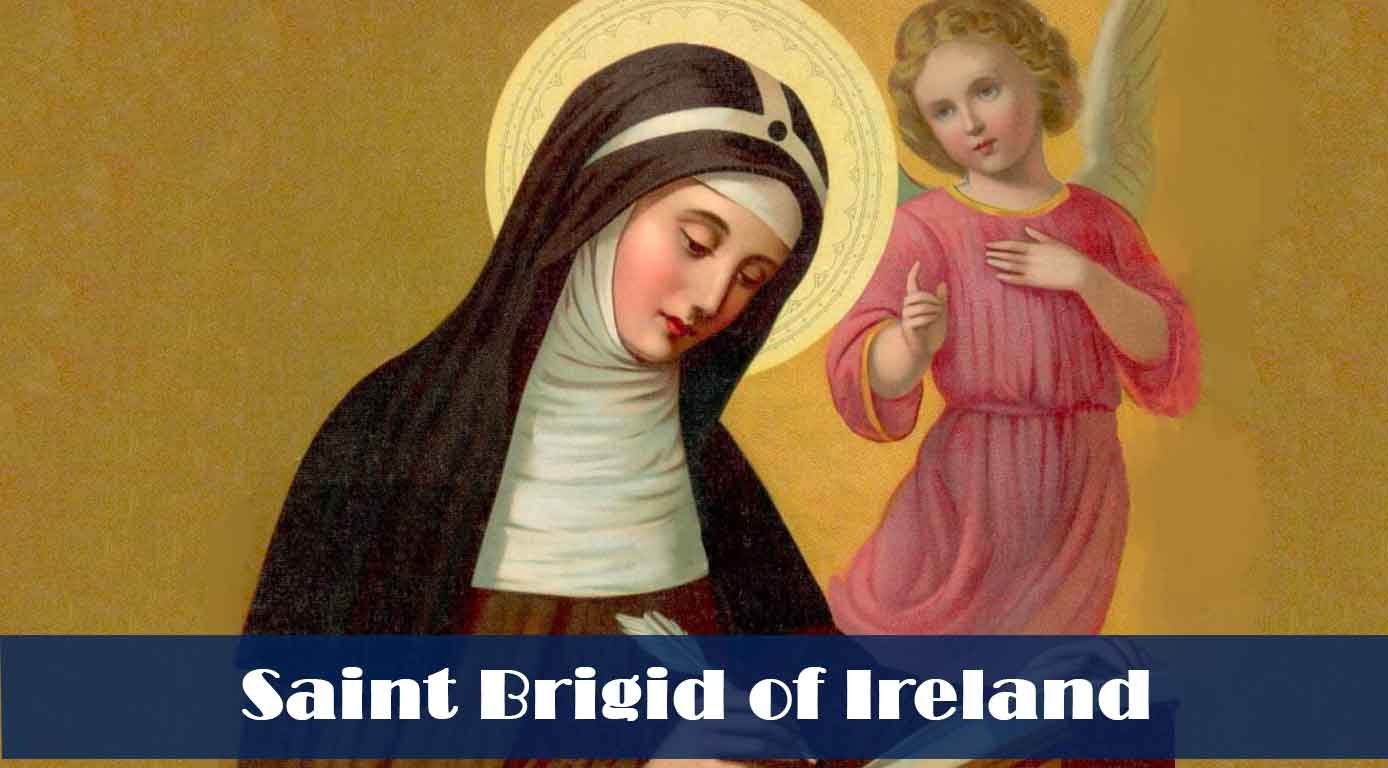
Today we celebrate St Brigid of Ireland, a saint whose life speaks powerfully to us across fifteen centuries. While many know her as Ireland's second patron saint alongside Patrick, or remember the legends of her generosity, I want to draw our attention to something more profound: Brigid's radical understanding that hospitality is not merely kindness but a sacramental encounter with Christ himself.
Brigid was born around 451 AD, likely to a Christian mother and pagan father. By her early twenties, she had founded the monastery at Kildare, which became a beacon of learning and charity throughout Ireland. But what distinguished Brigid wasn't simply that she was generous. Many people are generous. What set her apart was her theological conviction that every act of welcome participated in divine love itself.
The Catechism teaches us that "the works of mercy are charitable actions by which we come to the aid of our neighbour in his spiritual and bodily necessities" (CCC 2447). Brigid lived this with extraordinary clarity. She understood what Christ meant when he said, "I was hungry and you gave me food, I was thirsty and you gave me drink, I was a stranger and you welcomed me" (Matthew 25:35). For Brigid, this wasn't metaphor. It was literal truth.
The early accounts of her life, particularly Cogitosus's seventh-century Vita, tell us that Brigid gave away everything. She gave away her father's possessions, much to his fury. She gave away food meant for the monastery stores. She once gave away her mother's entire supply of butter to the poor, and when challenged, found the container miraculously refilled. Whether we read these stories as historical fact or spiritual truth, they reveal something essential: Brigid could not see someone in need without responding, because she could not see Christ in need without responding.
This is where her witness challenges us most directly. We live in a culture that has professionalised charity. We have food banks, homelessness services, aid organisations. These are good and necessary. But they can also allow us to delegate our personal responsibility. We write a cheque, we volunteer occasionally, and we feel we've done our bit. Brigid shows us something more demanding and more beautiful: that hospitality is a way of life, not a programme we implement.
Saint John Paul II, in his encyclical Evangelium Vitae, wrote about the culture of life versus the culture of death. He said, "The Gospel of life is not for believers alone: it is for everyone" (EV 101). Brigid embodied this gospel of life through radical welcome. Her monastery at Kildare didn't simply serve Christians. It served everyone who came. The hungry were fed. The sick were tended. Scholars were taught. This was mission in its purest form, not through preaching alone but through the witness of love made tangible.
We might ask ourselves: what stopped Brigid from becoming overwhelmed? How did she maintain this constant giving without emptying herself entirely? The answer lies in her contemplative foundation. Brigid was first and foremost a woman of prayer. Her hospitality flowed from her communion with God, not from mere human effort. The monastic tradition, which she helped establish in Ireland, has always understood this balance. Benedict would later write in his Rule, "Let all guests who arrive be received as Christ" (RB 53:1). But this reception is possible only when we ourselves are being constantly received and renewed by God in prayer.
This is the pattern we see throughout salvation history. Moses could lead the Israelites because he spent time in God's presence on Sinai. The apostles could transform the world because they had been with Jesus. Brigid could give everything away because she was being constantly refilled by grace. Her hospitality wasn't depletion but circulation, like a river that gives water freely because it is itself constantly fed by the source.
The Catechism reminds us that "prayer and Christian life are inseparable" (CCC 2745). In Brigid we see this inseparability made flesh. Her external works of mercy were the overflow of interior communion. This challenges our modern tendency to separate activism from contemplation, as if we must choose between prayer and service. Brigid knew no such division. For her, welcoming the stranger was prayer, and prayer compelled her to welcome the stranger.
There's something else we must notice. Brigid's hospitality wasn't sentimental. The sources tell us she was shrewd, capable, and practical. When she founded Kildare, she negotiated for land, established governance structures, and created sustainable systems of production and distribution. Her charity was intelligent. She didn't just give people fish; she taught them to fish. But she also gave them fish when they were hungry, because love demands immediate response to immediate need.
This combination of contemplative depth, practical wisdom, and immediate compassion is what we need now. Our world is full of need. Refugees seek safety. The lonely cry out for connection. The poor struggle for dignity. Climate change threatens the vulnerable first and worst. In the face of these overwhelming challenges, we can become paralysed or cynical. Brigid shows us another way: do what is in front of you, grounded in prayer, trusting that God multiplies our small offerings.
As we honour St Brigid today, let's ask ourselves one simple question: who is the stranger I am called to welcome? It might be the homeless person we pass. It might be the difficult colleague. It might be the family member whose views we find challenging. It might be the part of ourselves we've rejected. Hospitality, Brigid teaches us, begins with recognising Christ in the unexpected place.
"Let mutual love continue. Do not neglect to show hospitality to strangers, for by doing that some have entertained angels without knowing it" (Hebrews 13:1-2). In Brigid's life, we see this scripture lived completely. She entertained Christ daily, knowingly, joyfully. May we do the same.
Ancient Apostolic Catholic Church
Embracing faith, inclusion, and compassionate service together.
ST THOMAS AQUINAS SEMINARY
© 2026. All rights reserved
QUICK LINKS
Prayer Requests
Mass Intentions
Requiem Mass
Contact Us
Pilgrim Chronicles
ORDER OF ST DAVID
ORDER OF THE KNIGHTS OF ST MARY OF BETHLEHEM