St Francis de Sales: Slipping Truth Under Closed Doors
When words spoken aloud are rejected, perhaps words written down will find their mark. When grand proclamations are ignored, perhaps quiet persistence will win the day.
SAINTS
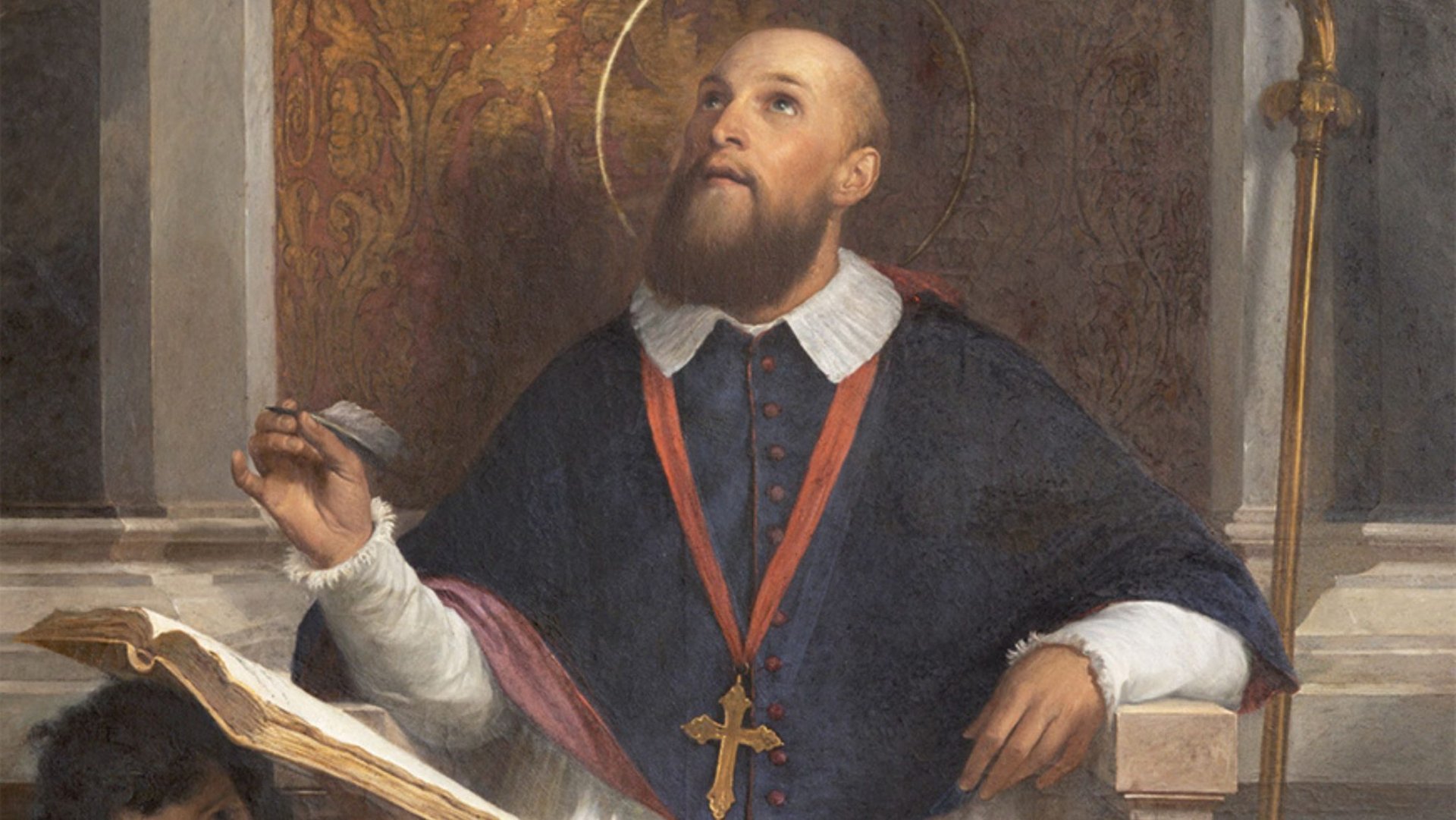
What strikes me most about St Francis de Sales is not simply his perseverance in the face of rejection, but the creative charity that perseverance produced. Here was a bishop who could have insisted on his rights, who might have complained about closed doors and hardened hearts. Instead, he did something rather remarkable: he changed his approach entirely.
The Chablais region where Francis laboured had largely abandoned the Catholic faith. When he arrived to preach, he found himself facing literal closed doors. The people would not listen, would not engage, would not even open their homes to hear what he had to say. A lesser man might have walked away. Francis stayed, but he adjusted his method.
He began writing. Short, clear treatments of Catholic doctrine. Explanations of the faith that were both accessible and uncompromising. These he would copy out by hand and slip under doors throughout the towns and villages. While people slept, the truth was delivered to their doorsteps. It was evangelisation by stealth, if you like, though there was nothing underhand about it. Francis simply recognised that if people would not hear the Gospel preached, perhaps they would read it in the quiet of their own homes.
This was among the first recorded uses of printed tracts for Catholic evangelisation. What we now take for granted, the pamphlet explaining some aspect of the faith, the brief written work aimed at instruction or conversion, this has its origins in Francis quietly working by candlelight, writing out the same truths again and again for different households.
The Church honours him as patron saint of writers and of adult education, and rightly so. His great works, particularly the 'Introduction to the Devout Life' and the 'Treatise on the Love of God', continue to form souls centuries after his death. But it all began with those simple tracts, pushed under doors in the early morning darkness.
There is something profoundly relevant here for our own time. We live in an age when many have closed their doors to the Church. Not necessarily out of malice, often simply through indifference or misunderstanding. The culture has shifted, and vast numbers of baptised Catholics have drifted away from the practice of their faith. How do we respond?
St Francis shows us that creative adaptation is not the same as compromise. He never diluted the Catholic faith to make it more palatable. His tracts were orthodox, challenging, unambiguous. But he found a new way to communicate unchanging truth to people who had stopped listening through traditional channels.
At St Thomas Aquinas Seminary, we hold Francis de Sales in particular regard precisely because his twin vocations as Catholic writer and spiritual director remain essential in our modern context. The need for clear, compelling writing about the faith has never been greater. We are drowning in words, yet starving for truth clearly expressed. The internet has given everyone a printing press, but very few are using it to slip Catholic truth under the doors of hardened hearts.
Similarly, his role as spiritual director speaks directly to our current need. Adult faith formation is not a luxury but a necessity. Too many Catholics reach adulthood with a child's understanding of their faith, unable to explain what they believe or why they believe it. Francis recognised that converting or reconverting adults required patient, personal accompaniment. It required meeting people where they were and gently, persistently, leading them deeper into the mysteries of faith.
The genius of St Francis was that he never mistook the message for the method. The Gospel remains the same, but how we communicate it must sometimes change. Closed doors need not mean the end of mission. Sometimes they simply mean we need to write more clearly, think more creatively, pray more fervently.
His feast day reminds us that the work of evangelisation is not complete when we have preached. Sometimes it is only just beginning. When words spoken aloud are rejected, perhaps words written down will find their mark. When grand proclamations are ignored, perhaps quiet persistence will win the day. Francis slipping his carefully written pages under doors is an image worth holding in our minds: humble, patient, utterly convinced that truth will eventually find a hearing if we are faithful enough to keep presenting it.
The doors may be closed today, but there is still a gap underneath. And the Gospel, properly explained and offered with genuine charity, has a way of seeping through.
Ancient Apostolic Catholic Church
Embracing faith, inclusion, and compassionate service together.
ST THOMAS AQUINAS SEMINARY
© 2026. All rights reserved
QUICK LINKS
Prayer Requests
Mass Intentions
Requiem Mass
Contact Us
Pilgrim Chronicles
ORDER OF ST DAVID
ORDER OF THE KNIGHTS OF ST MARY OF BETHLEHEM