
What the Falling Snow Taught Me About Prayer
Snow cleanses, hides the familiar beneath something pure and new, gives us a chance to see the world differently even if just for a little while.
HEALING
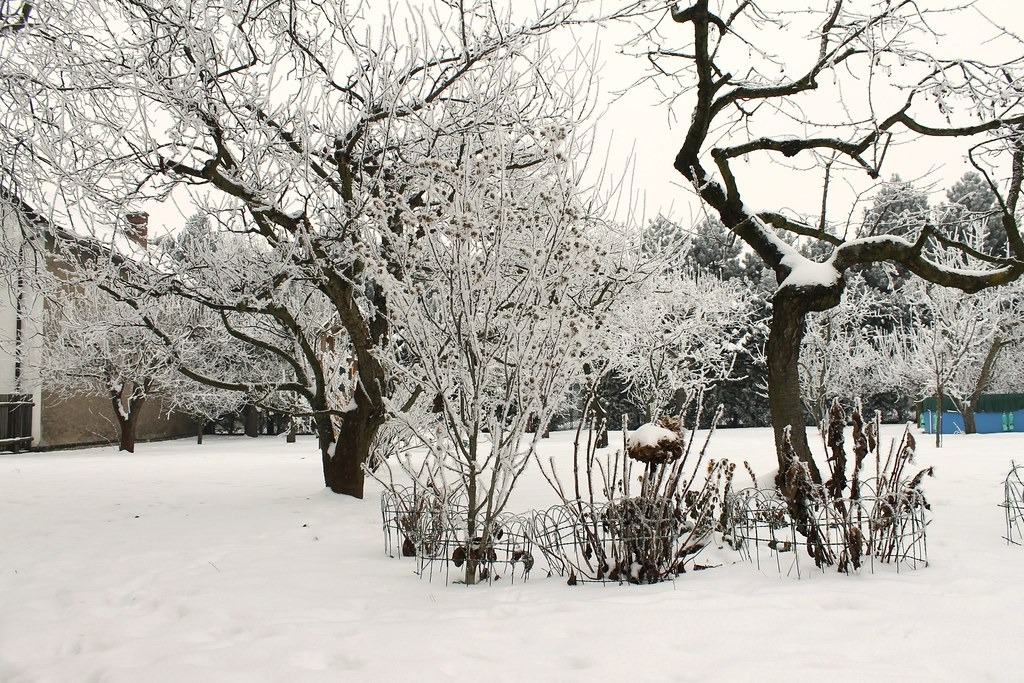
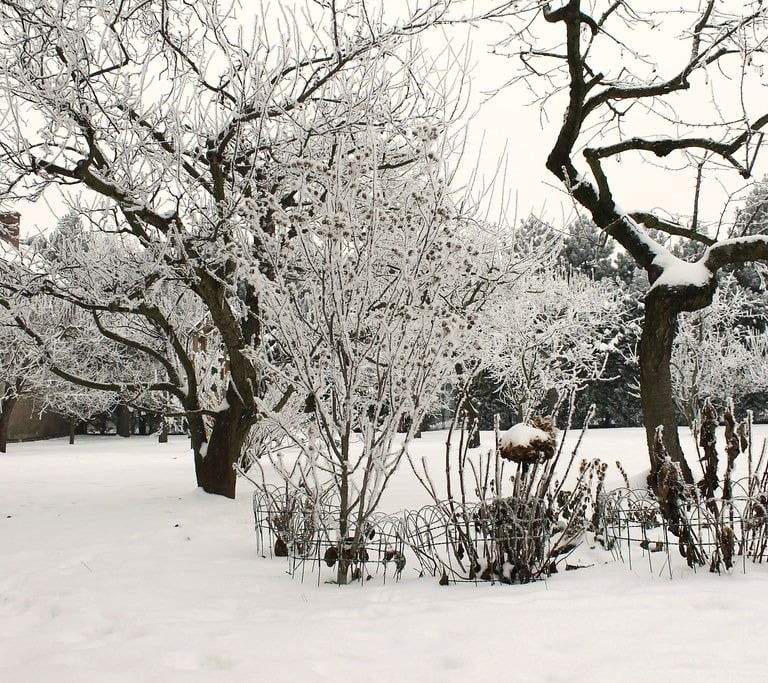
I live in a rural area, with cows grazing in the fields behind my house, and beyond them stretches what we call Common land in England - those ancient tracts of countryside where local people have held traditional rights to graze animals or gather resources for over one thousand years, land that belongs to everyone and no one, preserved for community use since medieval times. On this particular morning, snow had been falling heavily, and I found myself sitting in the garden, wrapped against the cold, watching as everything familiar disappeared beneath layers of white.
I expected silence. Complete, absolute silence. The kind of silence that presses against your ears and makes you aware of your own breathing. But as I sat there, genuinely still for once rather than rushing through my usual routines, I began to notice something unexpected. There was sound in that silence. Not the obvious crunch of footsteps or the crack of branches under snow's weight, but something far more subtle - an almost inaudible rustle as the snowflakes themselves fell, touching down on what had already settled, whispering their arrival. It was the gentlest sound imaginable, and I would never have heard it if I had been moving, hurrying from house to car or walking briskly through the garden with my mind on the next task. I had to be completely still, in exactly the right place, at exactly the right moment, with my whole attention focused outward. Only then could I hear what had been there all along.
This experience came back to me recently during a conversation with someone I meet with for spiritual direction. They expressed what I hear so often: "I don't hear anything when I pray. I sit in silence and there's just... nothing. Or the silence becomes too much and my mind wanders everywhere except where it should be." I understand that frustration entirely. We tell people to find God in prayer, to seek Him in the stillness, to wait for what Elijah discovered - not in the earthquake or the fire or the mighty wind, but in "a still small voice" (1 Kings 19:12). But we don't always help them understand that hearing that voice requires the same kind of preparation I needed in the garden that snowy morning.
Think about it this way. If I had tried to hear the sound of falling snow while standing at a busy junction in town, or while scrolling through my phone, or even while walking purposefully through my own garden with a dozen errands running through my head, I simply wouldn't have heard it. The sound was too delicate, too easily overwhelmed by anything else competing for my attention. It required me to be in the right place - somewhere quiet, away from traffic and crowds. It required the right time - a moment when I could genuinely stop rather than squeeze prayer into a gap between obligations. And it required something of me personally - a willingness to settle, to let go of my mental to-do list, to actually listen rather than just hear.
Prayer works much the same way. We can't expect to hear the "still small voice of calm" if we're spiritually standing at a busy junction. God's voice is there, just as the sound of falling snow was there whether I noticed it or not, but we need to position ourselves to receive it. This isn't about God being difficult to reach or playing some sort of cosmic game of hide and seek. It's about the nature of what we're trying to hear. When Christ tells us, "when you pray, go into your room and shut the door" (Matthew 6:6), He's not being metaphorical about the importance of privacy - He's teaching us about preparation, about creating the conditions where prayer becomes possible.
For some people, that room might be an actual physical space - a corner of their bedroom, a particular chair, a church that's open for quiet prayer. For others, it's more about time than place. They discover they can't pray well late at night when exhausted, but something opens up in the early morning before the household wakes. I know people who pray best while walking, whose minds settle into attentiveness through gentle movement and rhythme, and others who need to be completely still, sitting or kneeling, anchored in one spot. The Catechism reminds us that "meditation engages thought, imagination, emotion, and desire" (CCC 2708) - which means our whole person needs to be present and ready, not distracted or divided.
The spiritual masters understood this profoundly. St Teresa of Avila spent years teaching her Carmelite sisters not just to pray, but how to prepare themselves for prayer. She wrote about the importance of recollection, of gathering up our scattered thoughts and attention like someone collecting tools before beginning work. St Benedict built the entire structure of monastic life around creating the right conditions for prayer - regular times, dedicated spaces, a rhythm of work and rest that prepared the soul to be attentive. They knew what I discovered in my snowy garden: you can't rush into profound listening. You have to arrive there.
And sometimes, like snow transforming a landscape, that preparation itself becomes part of the prayer. Snow cleanses, hides the familiar beneath something pure and new, gives us a chance to see the world differently even if just for a little while. Sometimes a little while is all we need to make things right, to shift our perspective, to remember what matters. The practice of preparing for prayer - choosing the time, finding the place, quieting our minds - does something similar. It covers over the clutter and noise of our ordinary concerns, creating a clean space where we can begin again.
This is why I often tell people struggling with prayer to focus first not on what happens during prayer, but on everything that comes before it. What time of day leaves you least distracted? Where can you go that feels genuinely set apart, even if it's just a particular chair in your living room? What helps you settle - a few minutes of silence, reading a psalm, lighting a candle? These aren't preliminaries to prayer; they are prayer, or at least its beginning. They're the spiritual equivalent of me choosing to sit still in my garden rather than rushing past, of turning my attention outward rather than inward, of giving myself the chance to notice what was already there.
It took me a long while to realise there was sound in that silence. If I hadn't given myself the space and the time, if I hadn't been willing to simply be present without agenda or hurry, I would have missed it entirely. The snow would have fallen just the same, making its quiet whisper as it settled, but I would never have known. God's voice is already speaking. Christ promises us, "I am with you always, to the end of the age" (Matthew 28:20). The still small voice of calm is already there in the silence. But we have to prepare ourselves to hear it - finding the right place, the right time, the right posture of attention. Only then can we begin to notice what has been waiting for us all along.
Ancient Apostolic Catholic Church
Embracing faith, inclusion, and compassionate service together.
ST THOMAS AQUINAS SEMINARY
© 2026. All rights reserved
QUICK LINKS
Prayer Requests
Mass Intentions
Requiem Mass
Contact Us
Pilgrim Chronicles
ORDER OF ST DAVID
ORDER OF THE KNIGHTS OF ST MARY OF BETHLEHEM