Strictness, Obedience and the Vineyard
Help us to trust our shepherds when their firmness seeks the good of souls, and to test our discomfort with prayer. Make our obedience a path to freedom and love, that your Kingdom may grow one soul at a time.
REFLECTIONS
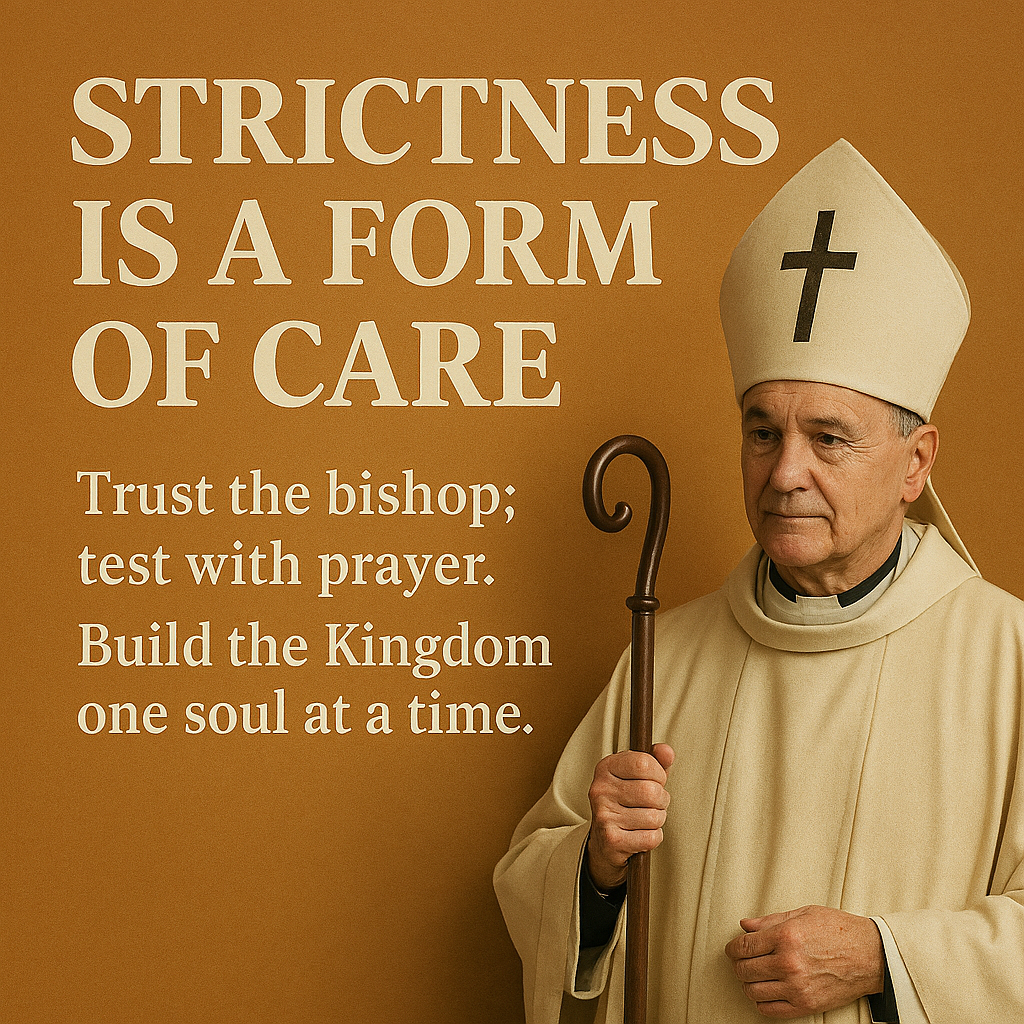
A Reflection on Strictness, Obedience and the Vineyard on the Memorial of St Egwin of Evesham.
Today we celebrate the memorial of St Egwin of Evesham. His forced pilgrimage to Rome was not an escape but a reckoning: accused of being “overly strict,” he sought papal vindication and returned to found Evesham monastery, a reminder that discipline can be prophetic, not merely punitive.
When clergy call a bishop “too strict,” we are often watching a collision between two goods: pastoral charity and ecclesial order. Egwin’s story shows that firmness, when rooted in care for souls, can be misunderstood and resisted; he went to Rome to answer those charges and came back to build a monastery that bore fruit for generations.
Think of St Benedict of Nursia. Benedict’s insistence on ora et labora, on communal discipline and accountability, provoked murderous envy and even attempts on his life: the poisoned chalice and the raven stories survive because they reveal how strictness can be a lightning rod for human weakness, not proof of failure in leadership. Yet Benedict’s Rule became the scaffolding for Western Christian formation; his firmness was formative, not merely authoritarian, and one that I follow today as a Benedictine.
Or consider St Basil of Caesarea, whose Asketikon laid down precise communal norms for monks in the fourth century. Basil’s rules were deliberate, pastoral and pragmatic: they trusted structure to form charity, not to crush it. Both Basil and Benedict show that strictness, rightly ordered, is a tool for conversion and stability, it shapes habits so the heart can be free to love God and neighbour.
So what does strictness mean for clergy in 2026? In a culture that prizes autonomy and mobility, strictness often reads as control; yet its pastoral purpose is formation. It asks: What habits will help this priest, this deacon, this community grow in holiness? If the answer is “boundaries, accountability, regular prayer and sacramental fidelity,” then what looks strict may be sacramental scaffolding. That said, strictness without charity becomes tyranny; charity without structure becomes drift. We need both.
This brings me to obedience. Obedience is not servility to a personality but a discipline of discernment. A bishop is not a colossus; he is a man called to shepherd a particular flock. Trusting a bishop does not mean uncritical assent; it means testing his directives by prayer, Scripture, tradition and the fruits they bear. Egwin’s pilgrimage to Rome was an act of accountability and trust in the wider Church’s discernment, a model for how to resolve conflict without flight.
That last point is a challenge to the Independent Catholic Movement: it is too easy to move jurisdictions when discipline bites. Flight avoids the hard work of conversion, reconciliation and mutual submission. If clergy treat jurisdictions like consumer choices, or revolving doors, then we lose the formative power of commitment. The saints I’ve brought to mind in this reflection accepted resistance, endured misunderstanding, and let their fidelity produce institutions that outlived them, even into the 21st century.
So I ask you, and I ask myself, to consider: are we willing to be formed by a bishop’s firmness when it is offered for the sake of souls? Are we ready to test our discomfort by prayer and counsel rather than by relocation? St Egwin, St Benedict and St Basil teach that obedience, rightly understood, is a crucible for holiness; it is not the erasure of conscience but the school where conscience is refined. Trust the work of the Holy Spirit, respect the office, and remember that every bishop, like every priest, is called to build the Kingdom one soul at a time.
I will leave you with this question to conclude our reflection: Am I willing to let my bishop’s firmness shape me for the sake of souls, testing my discomfort with prayer and counsel rather than choosing the easy flight?
Prayer: Lord, grant us humility to receive correction and courage to be formed for your sake.
Help us to trust our shepherds when their firmness seeks the good of souls, and to test our discomfort with prayer. Make our obedience a path to freedom and love, that your Kingdom may grow one soul at a time. Amen.
Archbishop Felix
Ancient Apostolic Catholic Church
Embracing faith, inclusion, and compassionate service together.
ST THOMAS AQUINAS SEMINARY
© 2026. All rights reserved
QUICK LINKS
Prayer Requests
Mass Intentions
Requiem Mass
Contact Us
Pilgrim Chronicles
ORDER OF ST DAVID
ORDER OF THE KNIGHTS OF ST MARY OF BETHLEHEM