The Living Rule: Benedict and Romuald as Guides for the Soul
For the modern Christian seeking to integrate contemplation into daily life, this is crucial. We're not called to choose between prayer and service, between the cell and the world.
PRAYER
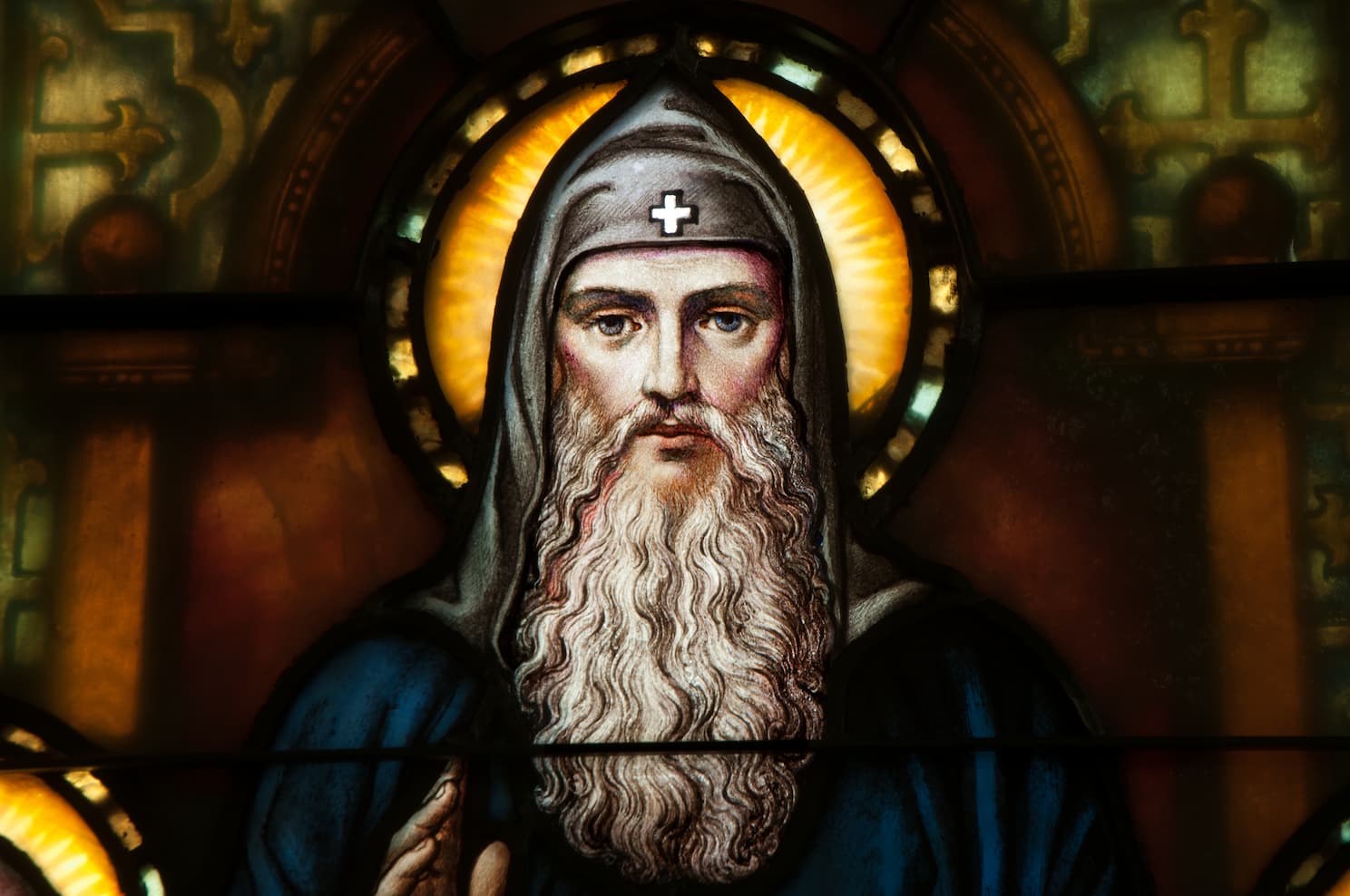
There's something profoundly counter-cultural about the Rule of St Benedict in our modern age. Written in the sixth century, it speaks with remarkable clarity to the twenty-first century soul, offering not a series of regulations but a way of life that transforms the ordinary into the sacred.
For those of us who follow the Camaldolese way, the Rule of St Benedict forms the foundation of our spiritual life, whilst the Rule of St Romuald draws us deeper into its contemplative heart. These aren't two separate spiritualities but rather two expressions of the same monastic wisdom: Benedict provides the structure, Romuald reveals its interior dimension.
The Rule as Spiritual Presence
St Benedict never intended his Rule to be merely a handbook of monastic procedures. From its opening word, "Listen" (Prologue, RB), it invites us into a living relationship with God. The Rule doesn't simply tell us what to do; it teaches us how to be. This is why Benedict describes his monastery as "a school for the Lord's service" (Prologue, RB), a place where we learn not through abstract theology but through the slow formation of daily practice.
The genius of the Rule lies in its attention to the seemingly mundane. Prayer, work, reading, meals, sleep: these ordinary rhythms of human life become, under Benedict's guidance, a pathway to God. As the Catechism teaches, "The Christian family is called to be a school of holiness and of prayer" (CCC 2685), and the Benedictine community extends this principle, showing us that holiness isn't found by escaping the ordinary but by transfiguring it.
Consider Benedict's teaching on lectio divina, the prayerful reading of Scripture. This isn't Bible study in the academic sense. It's an encounter with the living Word. As St Jerome wrote, "Ignorance of Scripture is ignorance of Christ" (Commentary on Isaiah, Prologue). Benedict understood this deeply. When we engage in lectio, we're not extracting information; we're allowing ourselves to be read by God. The text addresses us, questions us, transforms us.
The Contemplative Heart
Here we find the particular charism of the Camaldolese tradition. St Romuald's brief Rule distils the Benedictine life to its contemplative essence: "Sit in your cell as in paradise. Put the whole world behind you and forget it. Watch your thoughts like a good fisherman watching for fish" (Rule of St Romuald). This isn't escapism but rather the most profound engagement with reality, stripping away distraction to encounter God directly.
The cell becomes the place of interior work. Romuald continues: "The path you must follow is in the Psalms; never leave it." The psalms formed the prayer of Christ himself, and in praying them, we enter into his relationship with the Father. This is the contemplative dimension that Romuald saw at the heart of Benedict's vision: the monastery exists not primarily to do things for God but to be with God.
St Gregory the Great, in his biography of Benedict, describes a mystical experience where the saint "saw the whole world as though gathered up in a single ray of light" (Dialogues II, 35). This contemplative vision doesn't diminish the world's importance but reveals its true nature: everything exists in God, sustained by his love. The contemplative monk doesn't flee creation but sees it more truly.
Lessons for the Modern Soul
What does all this mean for someone living in our fragmented, hyperconnected age? The Rule of St Benedict offers something our culture desperately needs: integration. We live in a world that separates the spiritual from the material, work from prayer, the sacred from the secular. Benedict shows us a different way.
His teaching on stability, for instance, speaks powerfully to our restless age. We're constantly tempted to believe that the answer to our dissatisfaction lies elsewhere: a new job, a new relationship, a new location. Benedict calls us to stay, to dig deep where we are. As Pope Benedict XVI reflected, "The Benedictine charism manifests the ability to integrate every aspect of existence" (Address to Camaldolese Monks, 2009).
The rhythm of the Divine Office, the Liturgy of the Hours that structures the Benedictine day, teaches us something crucial: time belongs to God. We don't pray when it's convenient; we pray at appointed hours, allowing prayer to interrupt our work, our sleep, our plans. This is radical in an age where we treat time as a resource to be maximised. Benedict teaches us that time is a gift to be sanctified.
The balance between ora et labora, prayer and work, offers a vision of wholeness. St Thérèse of Lisieux, though not a Benedictine, embodied this when she spoke of doing small things with great love. Work isn't merely productive output; it's participation in God's creative action. As the Second Vatican Council taught, "Human activity proceeds from man, it is ordered to man. When a man works he not only alters things and society, he develops himself as well" (Gaudium et Spes 35).
The Cell Within
For those of us in the Camaldolese tradition, Romuald's emphasis on the cell takes on particular significance. But the cell isn't only a physical space. St Catherine of Siena spoke of building a cell within the soul, a place we can always retreat to regardless of external circumstances. This interior cell is where we encounter God in silence and solitude, even amidst the noise of the world.
Romuald's instruction to "realise with quiet concentration that you stand before God" captures the essence of contemplative prayer. This isn't about achieving special experiences or mystical states. It's about awareness, about being present to the Presence. As the Catechism reminds us, "Contemplative prayer is the simplest expression of the mystery of prayer. It is a gift, a grace; it can be accepted only in humility and poverty" (CCC 2713).
The practice of watching our thoughts, which Romuald recommends, anticipates what we might today call mindfulness, though with a crucial difference. We observe our thoughts not simply to achieve calm but to recognise the movements of spirit within us. St Ignatius of Loyola would later develop this into a sophisticated practice of discernment, but Romuald grasped the essential truth: our interior life matters, and God speaks to us in the depths of the heart.
A School of Charity
Both Benedict and Romuald understood that contemplation bears fruit in charity. Benedict's Rule is saturated with concern for the weak, the sick, the stranger. He instructs that "great care and concern are to be shown in receiving poor people and pilgrims, because in them more particularly Christ is received" (RB 53:15). This echoes Christ's own words: "I was a stranger and you welcomed me" (Matthew 25:35).
The contemplative life doesn't turn us away from our neighbour but deepens our capacity to see Christ in each person. As St John of the Cross taught, "In the evening of life, we will be judged on love alone" (Dichos 64). The silence of the cell prepares us for the service of charity.
For the modern Christian seeking to integrate contemplation into daily life, this is crucial. We're not called to choose between prayer and service, between the cell and the world. We're called to allow prayer to transform how we engage with the world. When we've encountered God in silence, we can recognise him in the face of the suffering, the marginalised, the difficult colleague or family member.
Living the Rule Today
The beauty of the Benedictine tradition is its adaptability. Benedict himself encouraged flexibility, noting that "the abbot ought to arrange everything so that souls may be saved and the brethren may go about their activities without justifiable grumbling" (RB 41:5). The principles remain constant, but their application varies according to circumstances.
For someone living outside a monastery, the Benedictine spirit might express itself in creating rhythm and ritual in daily life. Morning and evening prayer, even brief moments of lectio divina, the conscious offering of work to God: these practices form us gradually in the Benedictine way. As Pope Francis has noted, "The life of the Church is vast and rich. But the essential is what happens when you encounter Christ" (General Audience, 13 May 2015).
The contemplative dimension that Romuald emphasised becomes particularly important in our distracted age. We need silence. We need solitude. Not as escape but as encounter. Even brief periods of sitting in silence, watching our thoughts, being present to God's presence, can transform our spiritual life.
The Camaldolese tradition, with its unique blend of eremitical and cenobitic life, offers a powerful witness: we need both community and solitude, both liturgy and silence, both stability and interior pilgrimage. These aren't contradictions but complementary dimensions of a life fully alive to God.
The Rule of St Benedict, illuminated by St Romuald's contemplative insight, offers modern Christians a path both ancient and urgently contemporary. It teaches us that holiness isn't found in extraordinary experiences but in fidelity to the ordinary, transformed by grace. It shows us that contemplation and action, far from opposing each other, flow from the same source and lead to the same end: union with God and service of neighbour.
As St Paul exhorted the Colossians, "Whatever you do, in word or deed, do everything in the name of the Lord Jesus, giving thanks to God the Father through him" (Colossians 3:17). This is the Benedictine vision in scripture: all of life, every moment, every action, offered to God and transfigured by his presence.
In sitting in our cell, whether physical or interior, we learn to sit in paradise. In watching our thoughts, we learn to discern God's voice. In praying the psalms, we enter Christ's own prayer. And in this school of the Lord's service, we discover that the Rule isn't a burden but a liberation, not a constraint but a pathway to the freedom of the children of God.
Ancient Apostolic Catholic Church
Embracing faith, inclusion, and compassionate service together.
ST THOMAS AQUINAS SEMINARY
© 2026. All rights reserved
QUICK LINKS
Prayer Requests
Mass Intentions
Requiem Mass
Contact Us
Pilgrim Chronicles
ORDER OF ST DAVID
ORDER OF THE KNIGHTS OF ST MARY OF BETHLEHEM